How to Find Your Next Endeavor
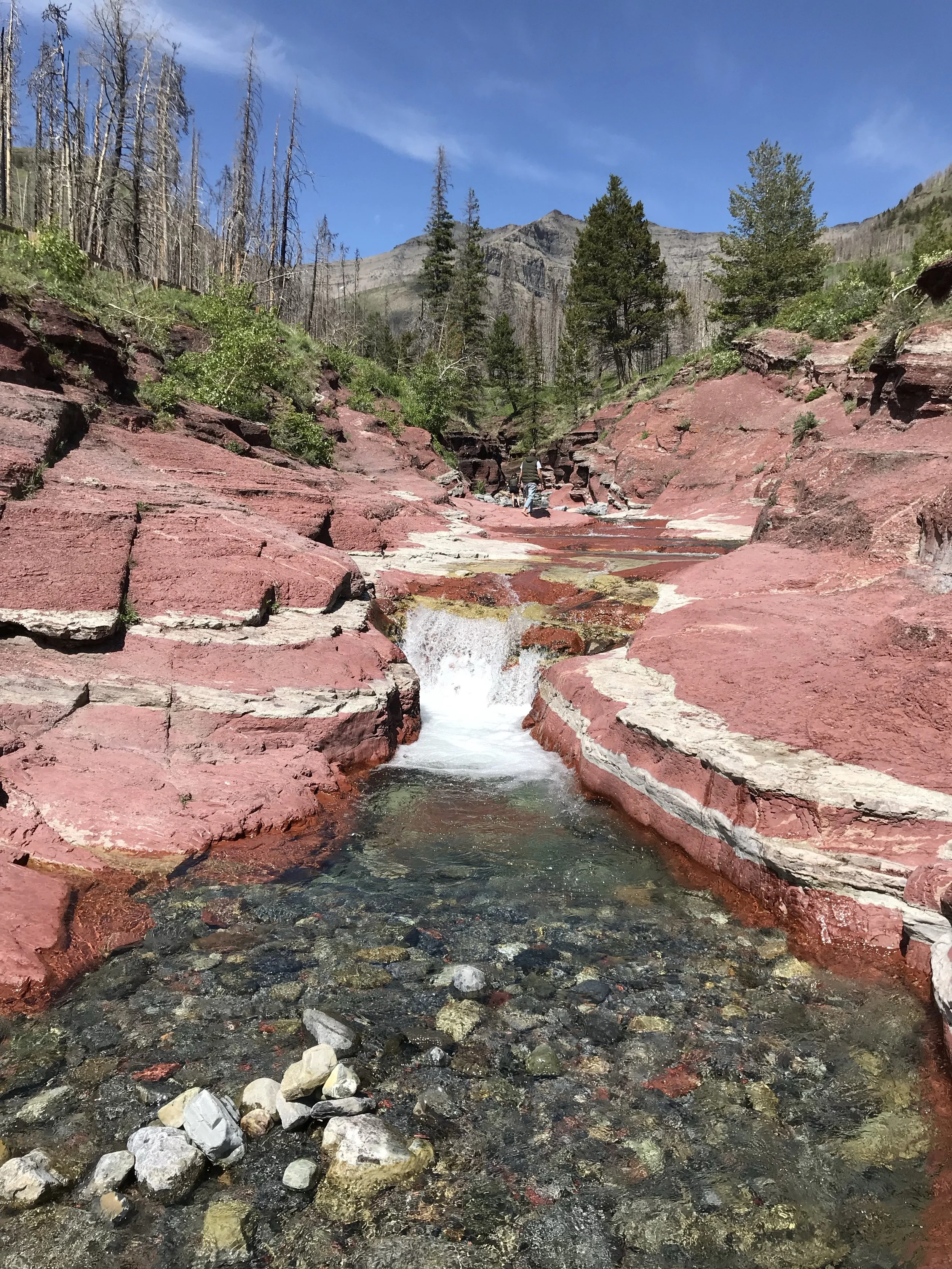
Just a few days ago, I hiked five miles up a red-rock canyon in a national park with the people who matter most to me in this world. Cool, emerald and azure waters rushing past my river shoes, sometimes ankle deep, sometimes knee, a few times approaching waist deep. It was a week of exploring, leisurely conversations, and wondering at creation in Glacier National Park and its Canadian twin, Waterton Lakes. Being in nature, relatively unplugged and focused on building a great life rather than just a career, always provides inspiration. Of all the gifts we are given, time in our healthiest years with the people we love may be the one most worth stewarding with intention.
Right now I am at 31,000 feet traveling at 530 miles per hour somewhere over Kansas, racing away from the life I love and the people I want to be with because part of my role is meeting with clients, and you do not always get to choose the timing. This is also the last week before my son goes back to college. There have been sacrifices over the years, and commitment and saying yes is a big part of how I rose in the ranks, but in the last lap before downshifting, I feel the loss more acutely than in the past.
It reminds me of a day in my late twenties when I ran my one and only marathon. Those last six miles of the Richmond Marathon involved several hills and I can remember thinking that I was getting close but was not there yet. While momentum can carry you the last few hundred yards when the end is in sight, I am not that close yet. So I fly toward a destination to grow the business and honor the commitments I have made, while dreaming of red-rock canyons, summer snowpack at 10,000 feet, and rainy days around the Airbnb board game table with people I love.
If you, like me, dream of more meaningful work on your own terms, with the flexibility to pursue hobbies, deepen friendships, spend more time with children and grandchildren, and make a genuine difference for others, this post is for you. For longtime readers who have been thinking about FINE for several months, one of the most frequent questions I get is how to know what specific Next Endeavor is right for you. While there is no perfect answer or formula, this post gives you a structure for identifying, pressure testing, and modeling some potential paths.
The financial case for a Next Endeavor has been made in this series. The math behind why a modest income during the first decade of retirement changes the probability of success is real, and if you have not read it yet, Why $20K a Year Changes the Retirement Math More Than You Think makes that case in detail. Some of the signals about whether you are ready are in The Seven Signs You're Ready for a Next Endeavor. This post is about something different: how to actually find “the thing”.
The Question Underneath the Question
Nearly everyone approaching this asks the wrong question first. They ask: what could I do, or what would I do if money were no object? While possibilities thinking is a great way to brainstorm, a better question is: what is already finding me?
For example, what do I think about when my mind wanders? What do I enjoy doing when I have an unstructured afternoon? It could be the early mornings working in your wood shop, a talent that friends uniquely seek you out for, an area where colleagues or family members ask for your advice or help. Those signals are not accidental. They may be the market telling you something before you have asked it a question. They are part of finding the right balance between what you enjoy, what the world needs, what fuels your heart, and what can allow you to produce even a modest income: your ikigai.
In a recent survey of Desert FI readers, the most common challenge among those who had reached or were near financial independence was not the financial math. It was purpose and identity: the empty calendar, the question of what comes next, the anxiety of having solved the money problem without yet solving the meaning problem. If that resonates, you are not alone and you are exactly who this post was written for.
This post gives you a way of reading those signals, pressure testing the directions they point toward, and building a conservative estimate of what a Next Endeavor might actually generate, so that when you sit down with a Monte Carlo model, you have a real number to work with rather than a wish.
Five Paths to Your Next Endeavor
Not every Next Endeavor looks the same. In my experience and observation, they tend to follow one of five paths. Many people find themselves drawn to one or two naturally.
Before we walk each one, a note on how trails work. On a desert hike, the most interesting routes rarely follow a single path from trailhead to summit. They cut across other trails, pick up a ridge line for a stretch, drop into a canyon, and emerge somewhere unexpected. Your Next Endeavor often works the same way. These five paths are not mutually exclusive. Many people find themselves on two or three simultaneously, and the most integrated lives tend to weave across all of them. Use them as a trail map to drive your exploration, not a checklist.
Path One: Flexible Adjacency
This is the most immediately accessible path and the one many people overlook because it feels too obvious.
You have spent decades building expertise, relationships, and institutional knowledge in a specific field. Smaller organizations need exactly what you know but cannot afford to hire it full-time. The market for your judgment exists before you hang a shingle. The question is not whether you can do the work. It is which parts of the work you actually want to keep and you would enjoy.
A senior finance executive becomes a fractional CFO for two or three small businesses that need institutional-grade thinking without the full-time cost. A physician steps back from a hospital system cuts back on shifts or opens a direct primary care practice on her own terms, seeing a fraction of the patients, spending four times as long with each of them. A commercial professional takes selective advisory and expert witness work, choosing projects and clients rather than inheriting them. Whether white collar, blue collar, or somewhere in between, expertise comes in all sizes and can be one of the easiest paths to monetize on a flexible schedule with work curated to areas of greatest interest.
Rick from Why $20K a Year Changes the Retirement Math More Than You Think lives here. Thirty-three years of diagnostic expertise in automotive work did not disappear when his body stopped tolerating the undercar work. He repositioned it: sit on a stool, diagnose what others cannot find, pass the physical work to his son. Same knowledge, better terms.
Betty, whose story I told in The Harder Trail, is another example. She had decades of skilled sewing work, but a body that could no longer handle wedding dresses and floor-length curtains, and she found a community at her church where she started showing her work at the Christmas bazaar. She adapted her craft to quilts, baby blankets, and decorative pieces her hands could still manage. The income followed the contribution rather than the other way around. And what came back to her, beyond the $10,000 to $20,000 a year that stabilized her finances, was something she had not expected: her dignity. The sense that the skills she had spent a lifetime building could still sustain her.
The honest note on this path: for some professions, the shelf life may decline over time. Your consulting relationships and institutional knowledge are most valuable now, while they are fresh and current. Waiting five years to activate them reduces their value. If flexible adjacency is your path, starting the conversations earlier rather than later is a meaningful advantage.
Path Two: Dormant Talent
This path is subtler and often harder to name because the talent in question may have spent years in dormancy or being underutilized as a component of a different career.
It is the writing you have been squeezing into early mornings before anyone else is up. The painting that comes out on vacation. The woodworking bench in the garage that has not seen a serious project in three years but that you think about more than you let on. The music you wrote in your youth, calling to you in the quiet moments when you dream of a simpler time. The teaching impulse that shows up every time a younger colleague asks for your advice and you find yourself energized in a way the actual job no longer makes you feel.
These are not hobbies waiting to be monetized. They are callings that got deferred by thirty years of building a career and raising a family. The Next Endeavor is the season where they finally get the time they were always owed.
In the Desert FI community, I have watched this pattern emerge in real time. One reader is planning to lead yoga retreats, something she did very part time around a busy and demanding career. Another is a landscape painter whose wife writes songs, and they are building toward a life where both of those things have room to breathe. A third is already planning guided trips to France built around her genuine love of the country and her years of experience planning travel there for herself and her friends. This combines her passions with helping others experience somewhere new for the first time, while supporting her travel desires in a modest way.
For me it was writing. My father was a writer and I can remember falling asleep to the clickety-clack of his typewriter in the basement office. He retired from writing for a major news magazine and had a Next Endeavor writing freelance flexibly, eventually writing two books. I followed in his footsteps in high school, writing for the school paper and landing a paid weekly column as a senior in the local paper. While I write persuasively in my leadership role, I had not written purely for the love of it in more than three decades as my career consumed everything. When I came back to it, the passion returned immediately: this is one of the things I am genuinely made for. I know that not because it came easily, but because I could not stop doing it even in the weeks when I had every reason to stop.
If there is something like that in your life, something you have been doing in the margins for years without economic justification, that is worth paying attention to.

Path Three: The Giving Path
Some people's Next Endeavor is not a skill or a talent but a population they feel called to serve. I have a good friend who feels called to help support those facing starvation and volunteers weekly at a wonderful nonprofit, aptly called Feed My Starving Children. She regularly brings groups of friends or people from community activities she is involved with to serve together. They pack Manna Packs with vitamins, vegetables, soy, and rice for an hour and a half to upbeat music, laughing and helping provide sustenance to children around the world while competing with other groups to see who can pack the most food for those in need. If she needed some supplemental income, she could easily work there part-time and love every minute of it.
Other examples include a retired executive mentoring younger professionals or serving on a nonprofit board, a physician who volunteers at a free clinic one morning a week, or a teacher who tutors children in underserved schools at a fraction of her former rate. It could be personal finance professional who teaches a class at his church on Sunday mornings because the people sitting in those chairs need someone who knows the math and will give them an honest hour of their time.
The Giving Path is the least likely to generate significant income and the most likely to generate meaning. For some readers that is exactly the right trade.
Path Four: Seasonal Passion
This path takes something you do for love, something you are genuinely excellent at, and creates a light commercial version of it that generates income on a schedule that fits the life you want. It’s not a business in the traditional sense, or a consulting practice. It’s more likely a recurring seasonal engagement built around something you would do anyway.
The distinction from Path Two is worth naming. Dormant talent is about finally having time for something that was always there. Seasonal passion is about taking something you are already doing and recognized for, and building a version of it that pays without consuming the freedom that made it appealing in the first place.
I have been asked for travel advice more times than I can count. People know I plan well and that I have been to enough places to know what makes a trip exceptional versus merely good. There is a version of me that could lead two or three curated trips a year: London and Oxford, a week in Paris, or Rome and the Amalfi Coast, for a small group of people who want a well-traveled guide with genuine enthusiasm rather than a tour bus experience. GetYourGuide and Airbnb Experiences are the platforms that make this accessible without requiring a traditional travel business infrastructure.
The Arizona version is equally real. It could be desert hiking with someone who knows the Sonoran Desert well, the trails above the Phoenix valley at the golden hour, the less-traveled routes in the Superstitions, is exactly what a certain kind of visitor wants and cannot easily find. There could come a day when I lead the occasional desert clarity retreat and take small groups to my favorite trails for some life clarity and reflection.
The honest note on this path: it carries more operational complexity than it might appear. Leading trips requires logistics, liability, insurance, and customer management that the other paths do not. The seasonal constraint is a feature rather than a bug. Two or three engagements a year is not a business. It is a funded adventure. But it is real work even when it feels like play.
Path Five: The Integrated Life
This is the most personal path and the hardest to plan for, which is also what makes it the most rewarding to live.
Path Five does not start with a skill or a passion or a population. It starts with a vision of how you want to spend your days and works backward to find the meaningful and economic threads woven through it.
I came across a program recently that takes small groups through the islands of the Pacific Northwest on replica nineteenth century rowboats while teaching about biblical passages around water, think Jonah, certain Psalms, Moses. Several days of rowing, camping, learning traditional navigation, and exploring remote islands. For someone for whom faith is a central part of his life, and whose Next Endeavor is built around curiosity, physical engagement, content creation, and wonder at the world, that experience is just not a vacation. It is soul-filling, will increase fitness, and provides the kind of experiences that make great stories and deepen how you think about life. Who knows? You may hear next summer about me getting blisters rowing a centuries-old boat, for the adventure and for what it gives me to write about.
The Integrated Life is the version of FINE where the Next Endeavor does not fit into a single category because it is the life itself. It becomes a flywheel of passions, creativity, friendships, and purpose coming together in ways you may never have expected. The writing and the hiking and the teaching and the travel do not have to be separate pursuits. We are one being, heart, soul, body, and mind, and a Next Endeavor can finally give those dimensions room to exist together.
The Pressure Test
You may have recognized yourself in one or two of these paths. The next question is whether the recognition is real or just appealing in the abstract. That is what the pressure test is for.
Before you model a dollar of income from any direction, run it through three questions.
Question One: What does the work actually involve, and do you genuinely want to do those specific things?
Not the version you imagine when you are daydreaming about it. The actual day-to-day reality of the work.
I explored adjunct faculty work seriously. Teaching genuinely appeals to me. But when I examined what adjunct teaching actually involves, re-learning material I last studied thirty years ago, preparing lectures from scratch, grading papers in an era where AI has made academic honesty nearly impossible to assess, for compensation that often works out to less than minimum wage per hour invested, the appeal faded quickly.
The same underlying impulse, teaching and helping people learn, found a better expression: guest lectures on topics I know deeply, keynote speaking to corporate audiences on burnout, midlife reinvention, and personal finance, mentoring professionals who are where I was a few years ago. It may even involve speaking at FI conferences, not for an honorarium but for complimentary travel and registration, to be with the community and connect with readers. Higher engagement, working from knowledge I already have rather than knowledge I would have to rebuild.
The pressure test is not: do I like the general idea of this? It is: do I want to do the specific things this work requires on a Tuesday in February when the energy is not there?
Question Two: How available is this work in the market at the scale and flexibility you need?
A high school math teacher with thirty years of relationships and a summer calendar that has always been her own can generate tutoring income almost immediately. The demand is real, the relationships exist, and the path to first revenue is short.
A retired NASA engineer with deep expertise in thermal reentry shield design faces a different market. The expertise is genuinely rare and potentially valuable. But whether that expertise is available in a project-based, flexible format requires actual conversations with actual organizations before it can be modeled. The demand may exist. It is not self-evident and will require research, networking, and creativity to confirm it is a viable path to an earlier exit.
Part of my own future flexible adjacency work may involve consulting in a specialized niche, similar in structure to management consulting but in a different industry. I regularly receive calls offering a few hundred dollars for an hour of my perspective on a specific topic. That tells me the demand is real and the pricing is viable. But before I model it as a meaningful income stream, I am doing the work of understanding the full shape of it. I have been having conversations with retired executives in my field about retainer models and short-term project structures, who hires for this kind of work and how they find it. In a few weeks I am having dinner with a former small-cap CEO friend I have not shared a meal with in fifteen years, specifically to understand how advisory board relationships work in practice and what that commitment actually looks like before I treat it as a real option. The dinner is also just dinner with an old friend. That matters too.
The wider the market for your expertise at the scale and flexibility you need, the lower the risk of the direction and the more conservatively you can model year one. The narrower the market, the more research and direct feedback you need before the direction earns a number in your spreadsheet.
Question Three: How steady does this income need to be, and have you tested it proportionally?
This is the most important question and the most frequently skipped.
Someone with 50 times their current spending and a 99% Monte Carlo probability of retirement success is in a very different position from someone at 15 to 20 times with an 85% probability. One is a passion project that happens to produce income. The other is a chance to leave a high-pressure situation and do meaningful work, but work that is genuinely required while the portfolio has time to grow.
A Next Endeavor that needs to generate $60,000 in year one requires a fundamentally different pre-testing standard than one that needs to generate $10,000 in year three. The higher the load the Next Endeavor needs to bear, the earlier and more deeply the testing needs to begin, the more direct feedback you need from actual clients or audiences, and the more conservative your year one estimate should be.
By way of illustration: I have been publishing Desert FI twice a week, between posts and a newsletter, for more than six months. Through high-stakes work weeks, through multi-city travel, through illness, through vacation and unplugging. There were weeks when I had every reason to take a week off. That level of consistency is not discipline for its own sake, it’s also evidence. The pre-test was not: do I enjoy writing when conditions are perfect? It was: can I not stop even when I have every reason to, and do I want to do it for the next five, ten, or even fifteen years?
If your Next Endeavor is load-bearing and you have not tested it under real conditions, the model may not be fully ready. Sometimes the testing is the work.
The Income Ramp Reality
Here is something most FINE content does not say plainly: your Next Endeavor does not need to generate income immediately. The first job of the Next Endeavor is not revenue. It is clarity.
I have modeled $0 in Next Endeavor income for the first eighteen months after my exit from full-time work. I strongly doubt that is what will actually happen, between consulting opportunities already coming my way and the platform I am building here. But I want the time to develop and test things, to have flexibility after forty years of someone else's schedule, and to make decisions about direction from a place of genuine discernment rather than financial pressure. I have saved specifically for those early months so the decisions about what to pursue are about what is right, not what pays fastest.
Path One, flexible adjacency, generates income the soonest. The relationships and knowledge are current and the market already knows you. But the shelf life may be declining. Starting those conversations now, before the exit, is a meaningful advantage.
Path Two, dormant talent, is a longer build with an expanding shelf life. A writing platform, a creative practice, a teaching presence: these compound over time rather than depreciate. The income arrives later but the asset grows rather than fades.
Understanding which path you are on changes when you need to start and how you model the ramp. A Path One Next Endeavor that begins generating income in month six looks very different in a Monte Carlo model than a Path Two endeavor that reaches target income in year three.
One more thing worth stating clearly: the relationships you build in the spaces you want to work are themselves a form of pre-testing. I am intentionally building relationships with people who are already doing the work I want to do, not to look for shortcuts, but because the wisdom of people further down the path, what works, what does not, where to focus time and energy, is genuinely irreplaceable. Friends in the space first, then mentors, then peers. That network is not a nice-to-have. It is infrastructure. And for those giving the advice, they get to be with you from the beginning and are invested in your success.
Now Model It
Once you have identified a few potential directions and done some investigation on how viable they are, the next step is to estimate the income each might generate. I recommend building three scenarios: a conservative case, a likely case, and an optimistic case.
The conservative case starts at $0 or a modest amount in year one, $10,000 to $15,000, depending on how connected the work is to your current profession and how widespread the demand is. Assume the realistic worst in year one and increase modestly each year over a reasonable time frame of three to five years. The likely case is your best, most honest gut-check of what is realistic. The optimistic case maps what happens if the work grows more quickly or reaches a higher ceiling than expected.
All three scenarios should model a ramp-down period. A Next Endeavor is not forever. In my own plan I have assumed a ramp to age 60 or 62 and a taper by 65 or 67. I have full freedom to decide to do it for a shorter term than planned, or longer if it remains my passion. The point is not to lock yourself into a long-term commitment but to see the impact on your financial plan of what you think is realistic, factoring in the time you want to spend and when you see your interest waning.
After you have built three scenarios, run each one independently against your financial model, or have a CFP or financial advisor do it for you. Particularly if you are under the 90% probability of retirement success threshold many planners recommend, see how the Next Endeavor affects your overall picture. It may clarify when you are able to retire, under what market conditions, and how load-bearing the work is or is not.
When I built my own three scenarios, the conservative case surprised me most. I thought I might need higher income overall, or sooner, to retire in my early fifties, but in reality the plan worked well even with the worst-case scenario. It was better than I feared, and that gave me a different kind of confidence than the optimistic case ever could. It allowed me to stay focused on service and enjoyment rather than monetization.
The difference between a $0 NE income assumption and a conservative $15,000 year one ramp may surprise you. It did for me.

A Reflection Worth Making This Week
Before you close this post, consider writing down four or five potential Next Endeavor directions that interest you. Not a final list, but a starting list. For each, note what specifically appeals about the day-to-day reality of the work, not the general concept. Research the market availability. Look for evidence that the demand exists in the format and flexibility you need. Talk to someone who is already doing it.
Then model it financially: is this income load-bearing or gravy, and what does a conservative year one estimate look like?
You do not need to have the answer before you leave full-time work. You need to have started the conversation, with yourself, with people doing the work, and eventually with a spreadsheet or planner that puts real numbers behind the direction.
The Next Endeavor is not a decision you make once and execute perfectly. It is a direction you test, refine, and adjust until the work and the life find their rhythm together. That process starts now, not later. The earlier you begin, the more evidence you have, and the more confident the plan becomes.
If you have never tried journaling as a tool for this kind of reflection, this might be the right moment to start. I wrote about beginning that practice in The 10-Year Window Most People Miss, which opened at a café table in Paris with a fountain pen and a question I could not stop asking myself. Sometimes the right question in the right setting opens something that the spreadsheet cannot reach.
The Airbus is now over Ohio. In a few minutes the laptop will close. There will be a video call upon landing, an Uber filled with back-to-back voice calls, then legal documents and financials to review, and a set of problems to solve before morning. The week will be full and likely stressful.
But there are tiny grains of red rock canyon sand in my jeans pocket that remind me of some great days last week, and better days that are coming, deliberately, at the right time, when I will wade back into those waters more regularly and my real life will not be something to escape from. It will be the main event. Planning and realistically modeling my financial plan took time, but it has given me the peace and confidence to know the date.
May you find that best version of your life. I hope these paths help you set the course and test the plan.
Let's make wise choices and live a great life together.
🌵 Desert FI
Want to go deeper?
Become a Desert FI Insider. Finding your next endeavor goes better with people who are looking too. Insiders get Weekend Reflections every Sunday morning plus free Insider-only resources like the FINE Number Calculator, a way to test a Next Endeavor against your own numbers. If you’re not on the trail with us yet, join at DesertFI.org/join.
Already an Insider? Here are three posts worth exploring:
The Weekday World I Never Saw: on testing the life you’re planning before you leave
Landing the Plane, Part 1: Building Your Drawdown Framework: on turning the numbers into a plan you can live on
7 Questions to Ask in Building Your Downshift or Retirement Budget: on the seven questions behind a retirement budget