Taste It Before You Can Afford It
How tasting the life you want before you can afford it is the foundation of everything you build
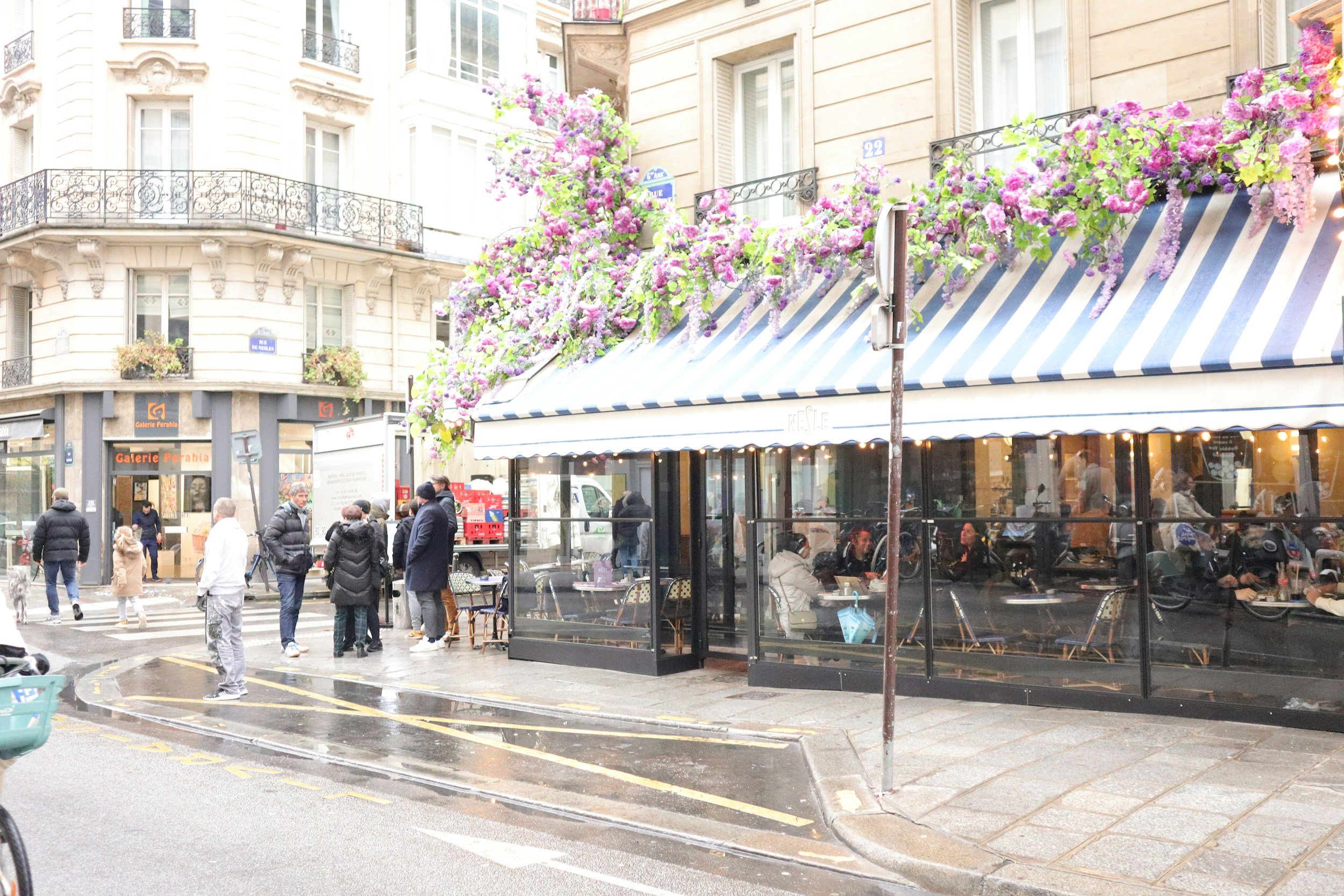
I can still remember the smell of the bread twenty-five years later.
Fresh baguettes filled the spring air near our two-star budget hotel. It was March and there was still a chill in the air as my wife and I walked toward the boulangerie for our first taste of freshly baked bread in Paris. We were twenty-six, tasting a bit of the life people dream about but often do not experience until they are much older; young, low on resources, and rich on time.
March is a time when Parisians are generally in a good mood. The tourist numbers are low, the cafes are less crowded, and the whole world felt filled with possibility as some warm days began to break through the winter gloom. Throughout the week, we enjoyed an empty Louvre, seeing the Mona Lisa with no lines, and climbed up to Montmartre's perch where artists paint the Parisian landscape. We dined on chocolate crepes from street carts and picnicked on bread and cheese on the steps above the city. Most of all I remember being with the one I loved most in the most romantic city in the world, pre-kids, just starting out on savings but rich in love and time.
Solomon wrote in Ecclesiastes that there is something good and right in eating and drinking and finding satisfaction in your labor, and that when God gives someone the ability to enjoy the fruits of what they have built, that enjoyment is itself a gift. Our Paris trip had that quality. The flights were free, credits accumulated by volunteering to be bumped from overbooked flights. The hotel was covered by the nonprofit I was working for, since between the sightseeing we were scouting locations to train college students going on global service trips. We did not finance that trip with credit card debt or steal from our future. We earned it through creativity, patience, and a willingness to wait in an airport a few extra hours. As we wandered Paris and breathed in the sights and sounds of the city, while most of our friends were at work, we felt a sweetness without guilt and dreamed of a day thirty or forty years in the future when we would be able to afford trips like this on our own and have the time to stay more than a week.
Here is what I have learned since then: those early tastes were not a distraction from building toward the life we wanted. They were the foundation of it. The more vividly and specifically you can dream about the life you are building toward, and the more intentionally you find ways to taste it along the way, the more clearly you know what you are actually building toward and why.
Most people in the FI community are excellent at answering how to get there. Very few have answered seriously what they will do when they arrive. This post is about that question.
When Freedom Was Just a Number
Back home after that trip, I had not yet seen the connection between the quiet sweetness of a spring week in Paris and the math of financial independence.
Personal finance at that time was about reducing debt, building investments, and having an emergency fund large enough to protect us from the unexpected: the HVAC that fails in August, the roof that needs replacing, or the job loss that comes without warning. I enjoyed running the math, modeling what different savings rates and return assumptions might produce over twenty or thirty years. What would $500,000 feel like? What about $1 million? What about, and this felt almost scandalous to dream, $2 million? Those numbers carried a lot of cultural baggage, but I wanted to save toward them and let time and the market do their work.
What we were really dreaming about in those early years was not a life but the absence of worry: no longer having the pressure of working just to stay afloat, being able to speak our minds more freely, enjoying more time with our family and better vacations. We had older friends who seemed to be living great lives and we hoped we would get there someday.
I wrote recently about lying awake in our first home with a young family, a chart of paid-off debt on the refrigerator, running spreadsheet models in the dark. That was the beginning of asking whether we could get there. This post is about a different question: what exactly is there?
It took me until my late forties to start asking that question with any real specificity. The Minnesota moment showed me my priorities had drifted, and since then I have reinvested in older rhythms: prayer, reflection, and time without a device to think. The leather-bound journal and the fountain pen my wife gave me have become something like a vision board for the life I am building toward, and the financial question and the life question have turned out to be the same project, just running on different timelines.
The Difference Between a Vacation and a Life
A vacation is one of two things. It is either an adventure where you explore new places, have new experiences, and are inspired by natural beauty; or it is a rest where you hang out on the beach with a book, walk with no agenda at sunrise, and linger over a long meal with nowhere to rush off to afterward. Both are forms of recovery, existing to help you recover from the busy, harried life you have left behind, whether that is a demanding career, raising kids, or caring for an aging relative. The better the vacation, the more clearly you feel the contrast with the ordinary days you returned from.
The question financial independence eventually forces is whether you are building a life that requires that much recovery, or whether you are building a life you do not have to escape from.
That is not a criticism of vacations. Mrs. Desert FI and I will always travel. She is, by her own admission, something of a Hobbit who loves the comfort of the Shire, and getting her out the door sometimes requires a little convincing. But she almost always loves it once we arrive. Lately, on hard days at work, when I joke about what time the night flight to Paris leaves, she looks longingly toward a day when we could take that flight on a whim, or hop down to Disneyland for a midweek couple of days, or spend a spontaneous long weekend in Sedona. What she is really looking toward is a life where I have the flexibility of schedule and the creative headspace for us to go to a new Paris together again, and the well-planned and deployed resources to make it responsible.
That is what we are building toward: not the freedom from, but the freedom for.
What an Ideal Tuesday Actually Looks Like
I have learned to be specific about this, because vague dreams produce vague lives.
The Tuesday I am building toward looks like this.
I wake up at six in the morning instead of four or five, with no call I have to be showered and dressed for by a specific time and no pressure to signal that I am online and available. There are a couple of cups of coffee, the newspaper on my iPad, and the unhurried beginning of a day that belongs to me.
After that comes something active: a run, a swim, a hike, or a session at the gym. Not because I have to squeeze it into a gap between obligations, but because my body is one of the most important investments I will make in this season and I intend to treat it that way. I have written about this in The 10-Year Window Most People Miss, which focuses on the years between 45 and 55. I am still in that window for a couple more years, and I am already building toward the next one, from 55 to 65, the go-go years when health and energy still make the biggest adventures possible.
Then comes quiet time: the journal and the pen on the back patio with the morning light, or at the top of a desert peak as the sun clears the ridge, or in a coffee shop with nowhere to be. Prayer, Scripture, and whatever is on my heart that week, written out slowly enough that I can actually hear what I think. What retirement changes is that this time is protected rather than borrowed from around the margins.
The middle of the day is for the work that matters: writing, coaching, preparing to teach a financial independence class, designing a retreat for fellow travelers on the trail, or an occasional consulting engagement in my profession. These are things I genuinely enjoy that keep my mind engaged and help me give back to a community and a world that has given so much to me. They also happen to generate income, which is the FINE insight: meaningful work in the second half of life changes the math as well as the meaning.
Afternoons are for the things that fill the tank rather than drain it: errands, a nap without guilt, walking the dog through the neighborhood, kayaking a quiet Arizona canyon in winter, or a long phone call with an old friend I have not seen in years. Early evenings are for pickleball, an open play community where the games run continuously and the people between games have become genuine friends, the highlight of most weeks and the first thing that gets cut when work gets loud. That will change.
Your Tuesday will look different. What matters is that you have described it specifically enough to recognize it when you are building toward it.

Taste It Before You Can Afford It
The Paris trip taught me a principle I have been living by ever since: do not wait until you can fully fund the dream to begin experiencing it. Find creative and financially responsible ways to taste the life you are building toward now, in smaller and less expensive forms, so that by the time you arrive you have confirmed it is actually what you want.
That Paris week was free, or nearly so, because we had learned to volunteer for flight bumps and accumulate travel credits. The hotel was covered by the nonprofit's scouting budget. We ate bread and cheese from the market rather than restaurant meals and saw the Mona Lisa with no lines because we went in the off-season when the crowds had not yet arrived. We got one of the finest weeks of our life for almost nothing because we were creative and intentional about finding a way to taste it early.
Those early tastes confirmed the dream. They showed us that what we loved was not luxury but unhurried time in beautiful places with the people we love, and that knowledge has shaped every financial decision we have made since.
Not every dream survives contact with reality, and that is valuable information too. Better to discover it early, on a day trip or a weekend, than after you have organized your retirement around an untested assumption.
A sweet taste of that future is available to anyone willing to be creative enough to find it before they can fully afford it.
What I Want to Have Given by 70
I have worked for someone else's agenda for roughly forty years, starting at age twelve or thirteen, moving from early jobs to the nonprofit world to the corporate career. Each season was good and meaningful in its time, but each of them was fundamentally someone else's mission taking shape through my time and energy.
What I want the next chapter to be is different: work on my own terms, at my own pace, toward purposes I have chosen rather than inherited.
By the time I am seventy, I hope to have personally coached two hundred and fifty people through some version of this journey, helping them get a handle on their finances, find their purpose, discover what a meaningful second half of life looks like for them specifically, and plan a well-timed exit from a demanding career before the career decides the timing for them. I want to write the book that helps even more people than I can reach one conversation at a time, lead retreats with fellow travelers, and speak where people who feel behind can hear that they are not as far back as they think.
I am not seeking more accumulation. I want to make a contribution, an outflow of gratitude for a life that has given me more than I deserve. And for those who have lost their purpose or their clarity about what makes the second half of life so meaningful, I want to help them recapture that spark: their own version of a two-dollar warm baguette on the steps of Montmartre.
There is a story I have remembered for years from a service trip to Mexico City. I was in my twenties, sick as a dog in the waiting area for the flight home: high fever, regular trips to the bathroom, dehydrated and miserable. A businessman, roughly the age I am now and clearly in a senior corporate role, watched me for a few minutes and then, without a word, used one of his systemwide upgrades to move me to a more comfortable seat closer to the facilities. He did not know me and owed me nothing. He simply saw a young man who needed help and had the resources to provide it.
I have thought about that man many times over the years, about the age he was then and the age I am now, about what it means to have accumulated enough, in resources and in standing, to be the one who helps rather than the one who needs it. That is what the freedom is for: not the seat upgrade, though that is fun when it happens, but the posture it represents and the ability to see someone who needs something and have what it takes to provide it without calculating the cost.
What that businessman modeled for me is what I watch for now in the people who are a decade ahead of me on the trail.
What the People Ahead of Me Are Teaching Me
One of my favorite financial podcasters likes to remind his listeners that in the messy middle of building toward financial independence, the days are long but the years are quick. I have found that to be true in ways I did not expect.
I invested heavily in my family during the elementary and middle school years and I am glad I did, but the grinder in me kept working until five on Fridays long past the point where that was strictly necessary. It was not for visibility or facetime; I simply could not turn it off. The same discipline that built the financial foundation became its own kind of constraint.
Near my house there is a pocket park, and some afternoons I walk past and see dads out with their kids at two or three in the afternoon: kicking a soccer ball, working on tee ball, riding down the street on kid-sized motorcycles. The principle works in both directions. Do not defer the life you want to live until the financial freedom arrives. And do not defer the presence you want to give your family until the career pressure eases. The permission to claim that Friday afternoon existed even in my busiest years. I simply did not know to take it.
But I am also watching those who are already on the other side, friends from my faith community who are a decade or more ahead of me on this trail. The ones thriving have a few things in common: they are serving something beyond themselves, staying physically active, and taking vacations that draw them closer to their spouses rather than simply filling the calendar. They have rich friendships and rich separate pursuits, which means they have news to share with each other at the end of the day.
The ones struggling have retreated; the days fill with Netflix and video games and a kind of sedentary sameness. They have not intentionally cultivated the friendships and the purposes that give the days shape, and they have made their spouse the primary, sometimes only, source of social and emotional connection. That is too much weight for one relationship to bear.
Your spouse is not your retirement plan. They are your partner in it, and the distinction matters more than almost anything else I have observed in the people who are already on the other side.
I am watching both groups carefully and taking notes.
The Dream Is the Strategy
Most people treat the dream as the reward: something you get to have after you have done the hard work of building the financial foundation. Save first, dream later. Get the number right, then figure out the life.
I think this is backwards.
The dream is the strategy. The more vividly and specifically you can picture the life you are building toward, the more clearly you can make decisions in service of it, and the more you can taste it along the way, in affordable and creative forms, the more confident you are that what you are building is actually what you want.
The Paris trip confirmed the dream. The Mexico City flight home showed me who I wanted to become. The ideal Tuesday, described in detail down to the pickleball games and the morning journal and the quiet canyon in winter, gives every financial decision a destination rather than just a direction.
The question is not whether you will get there. If you are reading this and you are saving and investing and making the big decisions on purpose, you will get there. The question is whether you have been specific enough about where there actually is.
Start there. Be specific. Taste it early and often, and let the dream do what it was always meant to do: pull you toward the life you were made to live.
Let's build for the future and taste that life along the way.
🌵Desert FI
Want to go deeper?
Become a Desert FI Insider. The dream is the strategy, and strategy goes better with company. Insiders get Weekend Reflections every Sunday morning plus free Insider-only resources like the FINE Number Calculator, to see what it takes to fund the life you’re tasting. If you’re not on the trail with us yet, join at DesertFI.org/join.
Already an Insider? Here are three posts worth exploring:
The Weekday World I Never Saw: on testing the life you’re planning before you leave
Why $20K a Year Changes the Retirement Math More Than You Think: what a modest Next Endeavor does to the numbers
Five Financial Decisions That Made My Downshift Possible: on the choices that built the margin