The Three Paths Out of Midlife Stagnation

What does a 650-mile run across Europe for a ten-pack of tacos have to do with midlife stagnation? More than you'd think.
If you read The Stop I Almost Slept Through, you know how I ended up in Prague. What I never told you is what happened next.
Three nineteen-year-olds. Six weeks across Europe on a Eurail pass and a Let's Go Europe guidebook. And suddenly: Prague.
We hadn't planned it. We hadn't packed for it. But the architecture was beautiful, the meals were cheap and plentiful, and the Charles Bridge made us forget for a while that Prague was a detour.
After a couple of days, we faced a decision. We could keep heading east and figure it out as we went: more adventure, less plan. We could cut our losses and fly home early. Or we could do something else entirely.
It was 1993. In those days, Taco Bell's tagline was "Make a Run for the Border." Back home in high school, my friends and I had elevated Taco Bell to something approaching a Friday night ritual. A ten-pack of tacos at fifty-nine cents apiece. Hanging out with friends in the parking lot, talking to girls. What more could a bunch of high schoolers want?
Sitting in a Prague café, I looked at my two friends and said: I could really go for some Taco Bell right now.
They looked at me like I'd lost my mind. "Dude, there is no Taco Bell in Prague."
They were right. But I reminded them there was one in London.
What followed was a 650-mile run for the border: a two-day overnight train back across Europe, arriving at London Victoria station, going directly from the station to the nearest Taco Bell without stopping. We ordered. We told the staff about the journey. The manager came out. He gave us t-shirts and hats and told our story to the entire restaurant.
Nobody back home could ever argue they loved Taco Bell more than we did. We had secured evergreen bragging rights.
But the Taco Bell wasn't even the best part. That one ridiculous pivot unlocked a week we never planned: the Tower of London, a boat down the Thames, bikes through Cornwall, sleeping in fields under stars, swimming in water so cold we couldn't breathe. We never would have had any of it if we'd stayed in a place that didn't fit.
I was nineteen years old and didn't know it yet, but I had just discovered something important: when you're stuck, the answer is rarely to keep going in the same direction or to give up entirely.
Sometimes the answer is a deliberate turn toward something that matters to you, even if it looks ridiculous from the outside.
Three decades later, I've watched a lot of people hit the midlife equivalent of waking up in the wrong city. The career that made sense at thirty feels like a poor fit at fifty. The identity built over decades starts to loosen. The math on FI starts to shift, and with it, the tradeoffs you used to absorb without thinking start feeling like choices.
When that happens, most people take one of three paths.
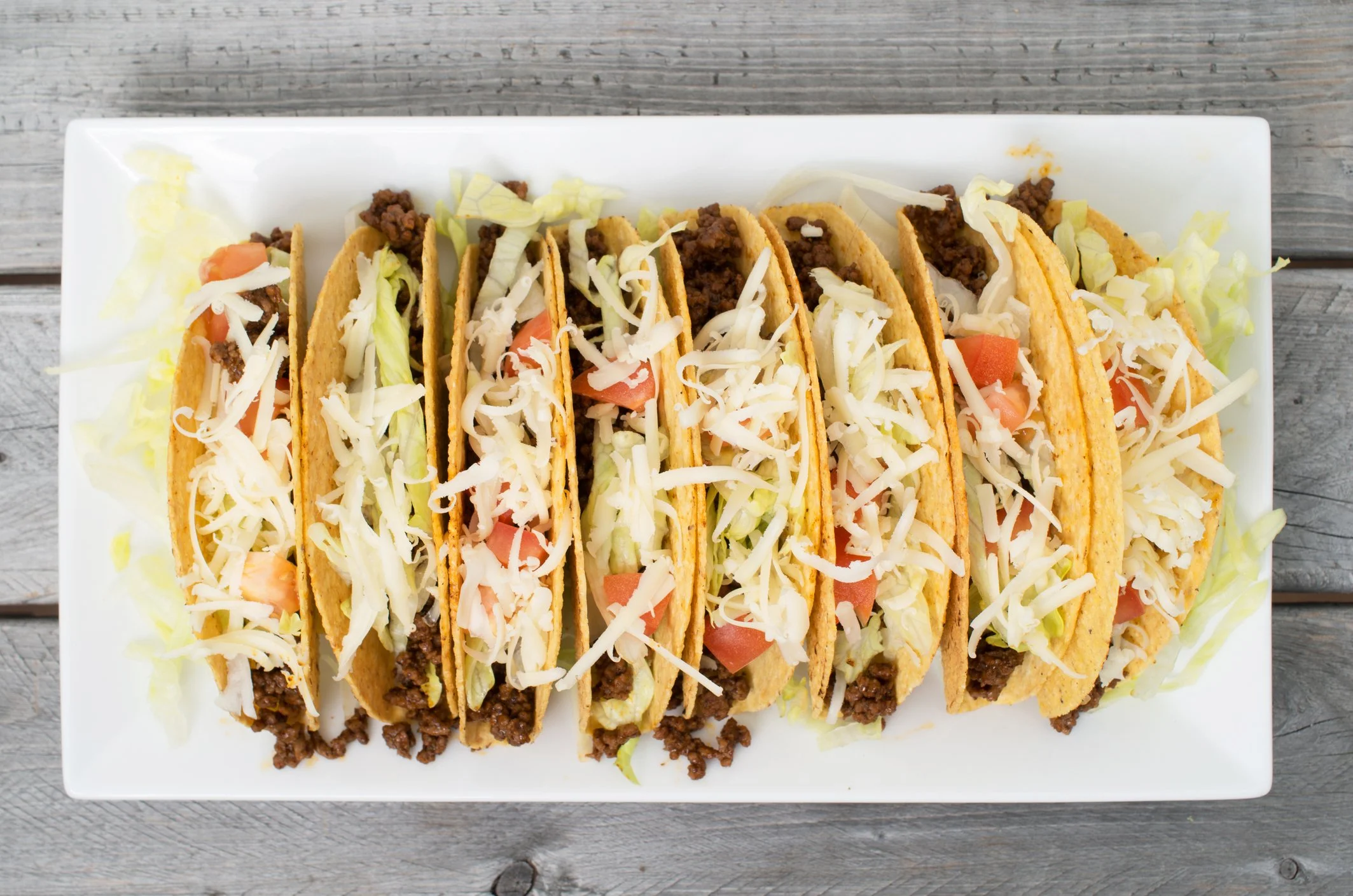
Six hundred and fifty miles for these. Worth every mile.
PATH ONE: DOUBLE DOWN
Push harder. Keep grinding. Prove you still have it. More hours, more miles, more hunger.
You don't have to work in a corporate office to recognize this pattern. The parent who signs up for one more classroom volunteering session they don't have capacity for because saying no feels like failing their kid. The freelancer who takes every client because turning one down feels too risky. The motivation is often the same: productivity as a disguise for fear.
I had a colleague at a previous company (sharp, experienced, deeply capable) who was terrified of getting laid off. We were in the office five days a week, and he had a specific strategy for Friday afternoons: avoid the bosses. He’d work at the coffee shop downstairs, disappear into a huddle room, and do whatever it took to stay off the radar. He’d worked out a theory that layoffs happened on Friday afternoons, and he wasn’t taking any chances.
He used to joke, half-seriously, that if he ever got the call, he'd find the maintenance closet, get the leaf blower, and send a thousand papers flying through the open office on his way out.
The punchline was funny. The reality underneath it wasn't.
He was deeply in debt and had no emergency fund, living paycheck to paycheck on a good salary. His white knuckles every Friday weren't just about the job; they were about the math. Without the paycheck, he had no runway. And so he ground. More hours. More stress. More hustle. Grinding not from ambition but from fear wearing ambition's clothes.
Fear disguised as tenacity is the engine behind most Double Down decisions.
Pilots call it course drift. Five degrees off at takeoff is imperceptible. Over a thousand miles it puts you in the wrong country. Midlife Double Down works the same way; the incremental compromises are invisible until the distance between where you are and where you meant to be is too large to ignore.
I understand this more personally than I like to admit. For a long time, I outworked colleagues for two reasons: genuine love of the craft, and a quiet fear that never fully disappeared after the Great Recession. Even years later, with a solid emergency fund and a growing net worth, I was logging on at 6 AM and answering every important email immediately to show responsiveness. I took great pride in that. I called it exceeding expectations.
The Double Down path isn't always wrong. Sometimes the timing genuinely isn't right to change direction. But when fear is doing the driving rather than purpose, you know. The work starts costing more than it returns. The rewards feel hollow. The effort required keeps increasing for the same results.
And one day you realize you've been running so hard you never stopped to check whether you were five degrees off course.
PATH TWO: BURN IT DOWN
Quit. Retire. Walk away. End the chapter.
For many people in the FI community, this is the whole point; and done right, it's a legitimate and joyful path. Full retirement isn't failure. Sometimes it's the most intentional decision a person makes.
The question isn't whether to burn it down. It's whether you know where you're going when the smoke clears.
An old friend retired as a partner at a consulting firm after decades of demanding work and significant travel. We're not in close touch these days, but I see his life from a distance on social media, and it looks genuinely full. Scuba diving in far-flung corners of the world. Trips with friends to Australia. Kids getting married. Singing lead vocals in his church worship band, using gifts he'd shelved for years. He's not restless. He's not lost. He found what full retirement looks like when you've actually thought it through.
The version of Burn It Down that goes wrong is the one without a plan for the arriving. The manager who spent months away from home while his family built a life without him, then retired and discovered the distance hadn’t closed just because the travel stopped. The person who crossed the FI finish line and found the silence louder than expected, not because freedom was wrong, but because they’d never asked what they were free for.
Burn It Down works when you know where you're going. Escape is not a direction. It struggles when that's the whole plan.
PATH THREE: TURN AROUND
Choose a new direction with intention. Not escape. Not more of the same. Something different.
This is the path I'm on.
I won't retell the full story here; my inaugural post covers it better than I could summarize. But the short version is this: it wasn't one moment. It was an accumulation. A crack of ice in a Minnesota parking lot. Desert hikes where I prayed and strategized about paying off our house and turbocharging savings. Hitting FI and feeling the tradeoffs I'd been absorbing shift suddenly from necessities to choices. Rediscovering writing. Watching a father-in-law die at 62 and understanding viscerally that health and energy are not guaranteed. The Turn Around wasn't a decision I made. It was a direction I found myself already facing.
A friend of mine (I’ll call him Pete) spent his career building and operating data centers, laying fiber lines, managing large technical infrastructure projects. Excellent at it. Well compensated. And increasingly aware that the work had stopped meaning what it once did.
He didn't burn it down. He turned around.
For the past few years, while still working his day job, Pete has been building something on the side: a financial coaching practice focused on people who are drowning in debt or just learning how money works. People who need someone to sit with them, build a budget, give them a roadmap, and walk alongside them for a few months while the habits take hold.
He's not getting rich doing it. He works ten to twenty hours a week, charges very little, and does plenty of it free. He expects to make maybe $5,000 to $10,000 a year when he fully transitions.
He is the happiest I have ever seen him.
The turn doesn't have to be dramatic to be real. Pete didn't need a breakthrough moment or a perfect plan. He needed to start walking in a different direction while he still had the runway to experiment.
The Turn Around doesn't require a business plan or a passion project. Sometimes it's simpler than that. There's a woman I'll call Ginger at the coffee shop I frequent most mornings. She's in her seventies, raised her kids, traveled with her husband, and arrived at a season where she missed something she couldn't quite name. She now works a few hours most mornings during the rush: dispensing drinks with warmth, bringing samples to tables, making strangers' days measurably better. I once asked her about it, honestly wondering if the math had forced her back to work. She told me she'd do it for free. For her, hospitality has always been the point. I believe her. She's brightened my morning more times than I can count. That's a Turn Around too.
There's an ancient caution about the person who builds bigger and bigger barns, storing up more and more, only to discover at the end that accumulation was never the point. The Turn Around is the answer to that warning. Not burning down what you've built. Redirecting it toward something that serves more than just yourself.
That's the part most people miss: the Turn Around works best when you begin before you have to.
WHAT TURNING AROUND ACTUALLY LOOKS LIKE
The Turn Around path isn't a single decision. It's a series of smaller ones.
Stop raising your hand for everything. In the final years before a transition, you don't need to quiet quit, but you also don't need to volunteer for every stretch assignment, committee, or initiative that crosses your desk. Do excellent work in your lane. Let some things go. The twenty percent of activities that drive eighty percent of your results deserve your best. The rest can be delegated or deprioritized.
Reduce the travel that costs more than it contributes. I used to want to attend every client meeting, every site visit, every customer event, because presence signaled commitment and I wanted that visible. I've started asking a different question: which of these trips are genuinely high-impact, and which ones am I doing out of habit or guilt? The answer has permanently changed my calendar.
Try things before you need them. For the past year I've been seriously considering buying a kayak. We've paddled on ocean, river, and lake over the years: wild horses on the shore, canyon walls glowing in afternoon light, the kind of silence you can only find on open water. Fifteen or twenty times over the past decade, and I've loved every one. So I started asking: why am I waiting until retirement to make this a regular part of life? There are lakes within twenty minutes of home. The kayak is coming. This is what intentional experimentation looks like; you don't wait until the transition is complete to start building the life you're transitioning toward. You start now, small, with low stakes, and let the good things reveal themselves.
Invest in giving before you retire. For the past three to four years I've been volunteering with a financial literacy ministry at my church, helping families get out of debt, understand money, start saving. It gave me something I didn't expect: proof that the work I want to do post-transition is actually what I think it is. Teaching and coaching people through financial decisions is genuinely meaningful to me. I know that now because I've done it, not because I imagined it. Try your next chapter in small doses before you live there full-time.
THE FI THREAD UNDERNEATH ALL THREE PATHS
Here’s something worth naming directly: the closer you get to financial independence, the harder it becomes to rationalize the tradeoffs you used to absorb without thinking. When you genuinely need the income (when the math doesn’t give you options), you absorb a lot. You tell yourself it’s temporary. You convince yourself everyone deals with this. You Double Down because you have to.
But when the math starts shifting, the same things that used to feel like the cost of doing business start feeling like a choice. And choices have to be justified differently than necessities.
This is what FI actually buys you before you use it: the ability to see your situation clearly. The margin to ask whether the path you're on is the one you'd choose if you were choosing freely. The space to start turning around before the turn becomes desperate.
Pete didn't need to be FI to start his coaching practice. But the financial margin he'd built gave him the confidence to invest time in it, the security to charge less than his market rate, and the freedom to do free work for people who needed it most.
The Turn Around isn't just about direction. It's about having enough margin to make the turn without spinning out.
Double Down is what you do when you don't have margin. Burn It Down is what you do when you have margin but no direction. Turn Around is what you do when you have both.

WHICH PATH ARE YOU ON?
Forrest Gump ran across America for three years and two months. Then one day, mid-stride somewhere in the Utah desert, he stopped. "I'm pretty tired," he said. "I think I'll go home now."
The crowd that had been following him didn't know what to do. They'd been running because he was running. When he turned around and walked home, they stood there looking at each other.
You don't need everyone to understand your turn. You just need to know which direction home is.
The best run for the border I ever made wasn't 650 miles across Europe chasing a Taco Bell. It was the quieter, slower turn I started making when I finally admitted the train was heading somewhere I didn't want to go and decided to get off while I still could.
Stagnation isn't a dead end. It's a signpost.
Which of the three paths are you on right now, and is it taking you where you actually want to go?
If you're somewhere in the Turn Around, even just beginning to consider it, take one small step this week. Not a plan. Not a decision. Just one experiment in the direction you want to go.
The crossroads is real. So is the trail on the other side of it.
See you on the trail.
🌵Desert FI
Want to go deeper?
Become a Desert FI Insider. Turning around goes better with company. Insiders get Weekend Reflections every Sunday morning plus free Insider-only resources like the Well-Timed Exit Checklist, a 16-point check on whether the timing is right. If you’re not on the trail with us yet, join at DesertFI.org/join.
Already an Insider? Here are three posts worth exploring:
The Seven Signs You’re Ready for a Next Endeavor: how to tell whether you’re ready or just tired
How to Find Your Next Endeavor: five paths to meaningful work
Five Financial Decisions That Made My Downshift Possible: on the choices that built the margin