Fresh Tracks: What a Glacier Taught Me About the Second Half of Life
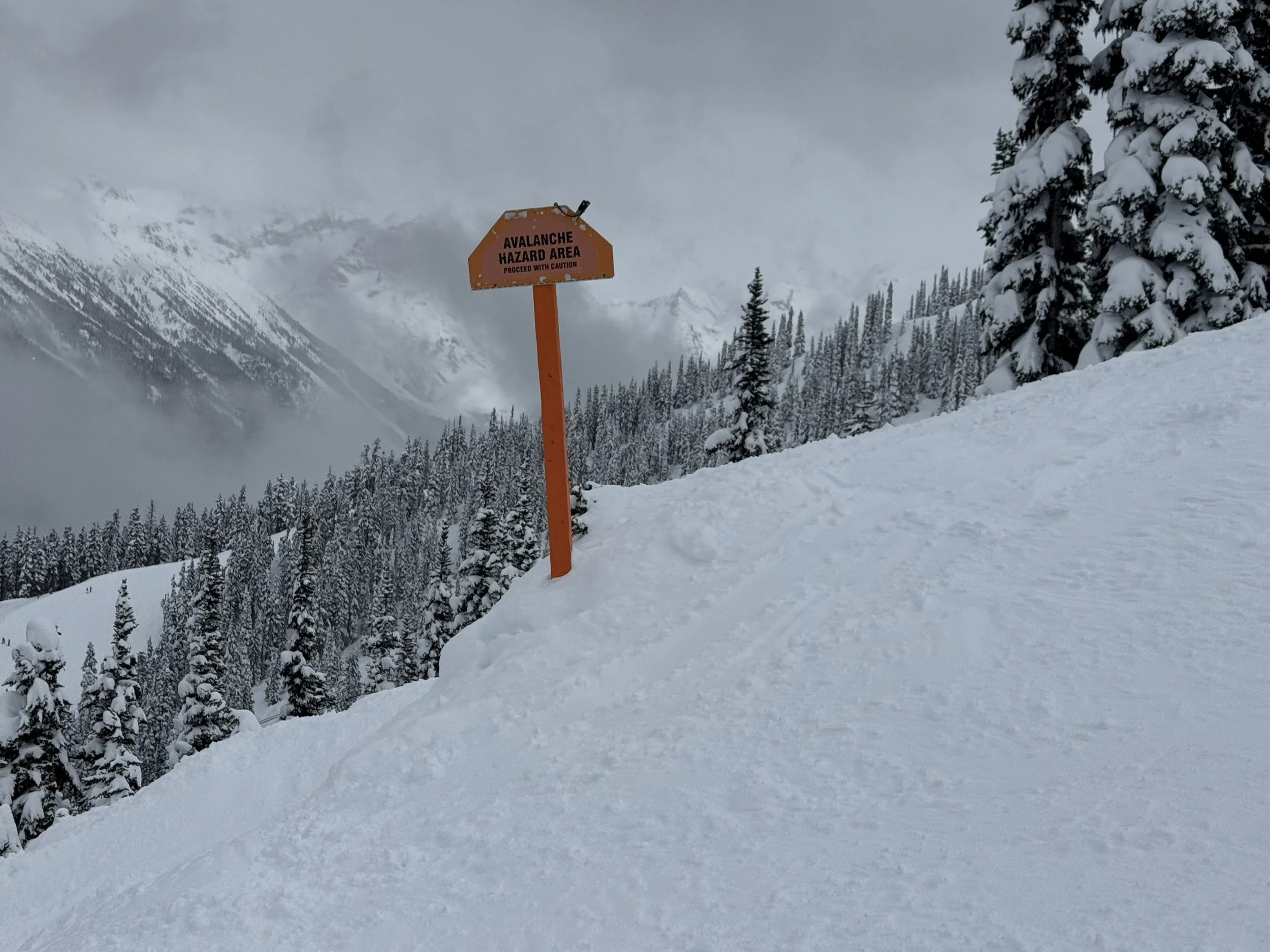
There's something about being first on a mountain in the morning that never gets old.
Fresh tracks. Unbroken snow. Nobody's line to follow; just your own instincts and whatever the mountain offers.
I took my college-aged son to Whistler Blackcomb this March: Blackcomb Glacier, 7,000 feet, conditions that would have sent most skiers inside for hot chocolate. My son skied hard taking longer days than he'd normally push, knowing he'd built in a recharge day for himself mid-trip. Smart kid. He knows how to manage his own energy better than most adults I know. I skied all five days, including one epic powder day that reminded me why I started skiing in the first place.
And somewhere between the descents and the drive back, I started thinking about the second half of life.
Before the Mountain Opens
I was in our condo at six in the morning, coffee in hand, when the first blast went off. The sound rolled across the glacier like distant thunder even through the windows.
Before the lifts open, before anyone drops in, the avalanche control crew does their work. Controlled blasts across the upper mountain: a deliberate release that sends the dangerous buildup down the slope on human terms rather than waiting for an uncontrolled avalanche that takes everything with it.
There's a saying in corporate life that most executives don't retire; they get fired or they leave. The ones who leave on their own terms are the ones who saw the torches and pitchforks coming and got ahead of them. Staying ahead of the parade is its own form of wisdom.
The avalanche control crew doesn't wait for the snow to decide when to come down.
Neither should you.
Some things are better triggered on your own terms.
The Daredevil Years
I was not always this measured about mountains.
In my late twenties, I was leading a group of college students on a spring break ski trip at Killington, Vermont. Double black diamond terrain. Trees. The kind of run where you're moving faster than your judgment.
I hit a jump, lost control, and went over a cliff, ten to fifteen feet of air, before my knee met a tree at the bottom.
Ski patrol carried me down. My gear was destroyed. My patella wasn't far behind.
It was the last time I let youth and invincibility make decisions for me on a mountain.
The daredevil years end one way or another. Better to choose when.
The Two Men on the Mountain
I am, at any given moment, two people.
There's the man in his late twenties who skied off that cliff at Killington because the mountain was there and the trees looked navigable and youth makes its own math. His parents were an adventurer and a Marine with a father who served in Korea and Vietnam and traveled the world not always under ideal circumstances, and a mother who graduated college, moved abroad to teach military families in Germany and Japan, and spent every nickel she could scrape together from a teacher's salary on trains, youth hostels, and the kind of cheap group tours that let a young woman see the world on almost nothing. She came home with photographs and stories and a permanent restlessness she never quite lost.
Adventure wasn't something my family scheduled. It was something we were made of.
That twenty-year-old still lives in me. He hears the avalanche control explosives at dawn and wants to drop into the steepest line on the mountain. He books the trips. He skis the glacier in the whiteout. He always will.
And then there's the man in his early fifties who has earned something the twenty-year-old hadn't yet: wisdom. Not caution but wisdom. There's a difference. Caution avoids the mountain. Wisdom chooses the right line down it.
The lesson of Killington wasn't stop taking risks. The lesson was: make sure the jump is worth the cliff.
The Leap
We made a different kind of leap when we moved to Arizona.
I had been offered a significant promotion, the kind that accelerates a career and changes a family's financial trajectory. The kind you say yes to.
But we were moving a middle schooler across the country. An awkward age under the best circumstances. A new city, a new school, a new everything. I told myself he'd adapt. Kids do. He did remarkably well. But the guilt of that decision, the knowledge that I'd traded his stability for my advancement, never fully disappeared.
So we bought the McMansion.
Not consciously as compensation, but if I'm honest, not entirely separate from it either. Four thousand five hundred square feet. Pool. Outdoor kitchen. Putting green. A fruit grove in the backyard. The kind of home that says we're planted here, we're committed, this is real.
It was a beautiful home. And for several years, genuinely the right one.
When the pandemic hit, that space turned out to be a gift none of us anticipated. Three of us working and schooling from home, each with room to think, to close a door, to breathe. We were luckier than most and we knew it.
But seasons change.
Our son went to college. The pool needed repairs. The fruit grove, which had seemed like such a gift, had roots quietly working under the pavers and into the privacy wall. Beauty becoming burden, slowly enough you barely notice until the bills arrive.
When we finally sold it, downsizing felt like loss at first. Then relief. Then the right call we'd been putting off for years.
The new house is smaller, meaningfully so. But it has everything we actually wanted: the kitchen, the flooring, the finishes we'd been planning for years. Lower maintenance, smaller yard, higher satisfaction per square foot. Average on the outside. Exactly right on the inside. Turns out the Millionaire Next Door principle applies to houses too.
Some structures we build for one season of life don't survive the next.
That's not failure. That's growth.
The square footage doesn't matter. Most people I know have a version of this story: something they built or bought for who they were then, that no longer fits who they're becoming.
Build a Life Along the Way
Here's what I've come to believe after five decades on this trail:
Chase your dreams. Find your adventure. Build a career, provide for your family, save and invest, achieve FI if you can.
But build a life along the way.
I used to take PTO nervously. Optics. Commitment signals. The unspoken calculus of the corporate climber: work harder than anyone else, be seen doing it, never look like you're not all in. Those instincts served me. I'm not apologizing for them.
But somewhere along the way the adventures stopped being rewards for good behavior. They became requirements for a good life.
Unused PTO is a human tragedy.
The mountains don't wait. The powder doesn't hold. The people you love are available right now, in this season, in ways they may not be in the next one. Which brings me back to the mountain and the question of whose tracks you've been following.
Whose Tracks Are You Following?
On a ski mountain, following someone else's tracks isn't always wrong. Early in your skiing life it's how you learn: you watch the better skiers, you follow their lines, you develop judgment through imitation.
But at some point, following someone else's tracks stops being wisdom and starts being avoidance.
Most of us have been skiing the corporate trail for decades. Someone else laid those tracks; the job title progression, the performance review cycle, the promotion that requires the relocation, the McMansion that says we're planted here. Good tracks, many of them. Tracks that got us somewhere real.
But they were never meant to be the only tracks available.
Here's what following someone else's tracks costs financially, and most people never run this number.
Every year you stay on the groomed run past the point where your own line was available is a year of peak health spent on someone else's schedule. A year of energy your future self will not have back. A year your spouse spent filling the space you vacated.
The portfolio may be growing.
But the account that matters most, time in your healthiest years, is only ever withdrawing.
The skier who waits too long for perfect conditions doesn't just miss the powder day.
They miss the decade.
Financial Independence, Next Endeavor (FINE) is the moment you look away from the groomed run and notice the untracked snow beside it. Same mountain. Different line. Entirely yours.
On powder days at Whistler, they open Symphony Amphitheatre: a vast bowl of untracked terrain with no groomed runs, no marked trails, just open mountain. You either drop in or you don't. There's no halfway.
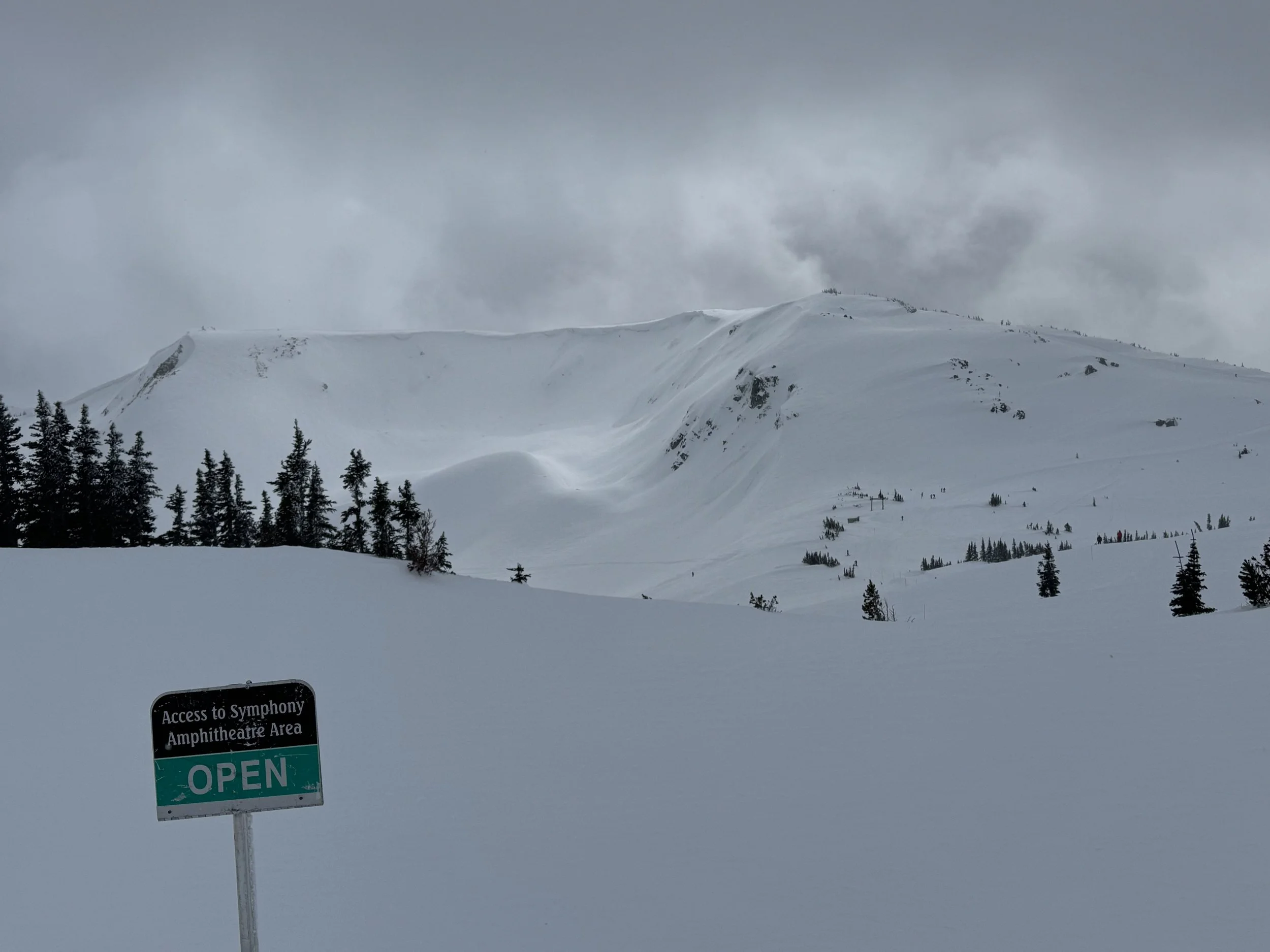
Symphony Amphitheatre, Whistler Blackcomb. No groomed runs. No marked trails. Just open mountain, fresh snow, and a line that's entirely yours to choose.
Scale Your Glacier
You don't need to be at Whistler Blackcomb to find your glacier. Mine happened to involve avalanche control explosives at dawn and a near-whiteout at 7,000 feet. Yours might be quieter: a Tuesday morning when you sat in a meeting and realized you were performing a role rather than living a life. A Sunday night when the dread arrived earlier than usual. A birthday that hit differently than expected.
Pay attention to those moments. That's the mountain telling you something.
Your glacier looks different from mine. But most people I know have one: something they've been circling, a version of themselves they haven't quite given permission to exist yet.
And most people I know also have debris building up somewhere on the slope. Old structures that no longer fit the season. Tracks they're following out of habit rather than intention. Pressure accumulating quietly until the mountain decides for itself.
The question worth sitting with this week:
Where do you need to set off intentional depth charges, to clear the way on your own terms, before life does it for you?
If you want to see what this looks like in practice, with the math behind it, The Harder Trail lays out three paths and what each one costs.
The avalanche control crew doesn't wait for perfect conditions.
Neither should you.
FINE doesn't ask you to ski off a cliff. It asks you to make one intentional turn away from someone else's line.
The fresh tracks are waiting.
And the mountain, your mountain, doesn't care how old you are when you drop in.
The Invitation
If you're in that in-between space (not done, not finished, but ready for something more meaningfully yours) take one step toward your glacier this week.
You don't have to see the whole mountain from here.
You just have to make the first turn.
If this resonated, share it with someone who's been skiing the same groomed run for too long.
And if you want more stories, math, and meaning each week, subscribe to Desert FI Weekend Reflections below.
Let's take the harder trail together.
🌵Desert FI
Want to go deeper?
Become a Desert FI Insider. The fresh tracks are waiting, and you don’t have to find your line alone. Insiders get Weekend Reflections every Sunday morning, free Insider-only resources like the FINE Number Calculator and the Well-Timed Exit Checklist, and behind-the-scenes looks at upcoming themes. If you’re not on the trail with us yet, join at DesertFI.org/join.
Already an Insider? Here are three posts worth exploring:
I’m Not Leaving Yet, and Here’s Why You Might Not Want to Either: on choosing the timing of your exit before someone else does
You Can Look Wealthy or Build Wealth. Pick One.: what happens when the life that looks right stops fitting
How to Find Your Next Endeavor: five paths to a next chapter that’s yours